What Was the Kelo Decision and Why Did It Matter?
In 2005, the United States Supreme Court decided a landmark case called Kelo v. City of New London. The ruling changed the way people across the country viewed property rights. Before Kelo, most people thought the government could only take private property for things everyone uses, like roads, schools, or parks. The Kelo decision said something different: the government could take private property and give it to another private party if it claimed the project would benefit the community, even if that meant building a shopping center or luxury condos.
This broader idea of “public use” as “public purpose” alarmed many homeowners and small business owners. It suddenly seemed possible that local governments could use eminent domain for almost any economic development project. People wondered, could their house or business be taken so a new hotel or apartment building could go up? The backlash was swift, and Florida was one of the states that acted fastest to protect property owners. If you own property in Florida, understanding Florida eminent domain reform after Kelo is crucial for knowing your rights and protecting your investment.
How Did Florida Respond to Kelo?
After the Kelo decision, Florida lawmakers and voters acted quickly to set clear limits on when and how the government could use eminent domain. The state Legislature passed the “Community Renewal Act” in 2006, and later that year, voters approved an amendment to the Florida Constitution. Both measures aimed to make sure what happened in Kelo wouldn’t easily happen in Florida.
These reforms had several key parts. First, Florida’s constitution now says that private property taken by eminent domain can’t simply be handed over to another private party. If the government does take property, it must be for a true public use, something like a road, park, or public utility. If a government agency wants to transfer the property to a private entity, there’s a mandatory three-year waiting period, and extra scrutiny is required. These rules make it much harder for the government to take your property for private development projects, even if those projects might boost local tax revenue or create jobs.
Transparency was another big focus. The law now requires the government to give clear, written reasons for any taking and to notify property owners well in advance. This gives you more time to review offers, ask questions, and prepare to challenge the process if needed. In short, Florida eminent domain reform after Kelo made the process stricter, fairer, and more open, giving you more control over what happens to your property.
What Counts as “Public Use” in Florida Now?
One of the biggest changes after Kelo is how Florida defines “public use.” The law spells out specific examples so there’s less room for interpretation. For most people, public use means projects that clearly serve everyone, like:
- Building or widening roads, highways, and public transportation systems
- Installing or repairing utilities, such as water, electricity, natural gas, and sewer lines
- Constructing public parks, playgrounds, schools, libraries, or government buildings
Let’s look at a couple of examples. Suppose the city wants to widen a busy road to reduce traffic jams, and your property sits in the new path. That’s considered public use. Or if the county wants to build a new elementary school and needs land, that too fits the definition. But if a developer wants your property to build a shopping mall, that’s not a valid public use under Florida law, no matter how much the project might boost the economy.
The reforms also block the government from using eminent domain to fix so-called “blighted” areas unless the property is a true danger to health or safety. In the past, some cities labeled entire neighborhoods as blighted just to clear the way for private development. Now, those loopholes are mostly closed in Florida. There’s an extra layer of review, and the government must show real evidence of danger, not just a desire for new business.
If property is taken for a valid public use but later the government wants to sell or transfer it to a private party, there’s a required three-year wait. During that time, the original owner or their heirs may have the chance to buy the property back. This discourages quick turnarounds and protects owners from having their land taken for questionable reasons.
The Eminent Domain Process in Florida: What to Expect
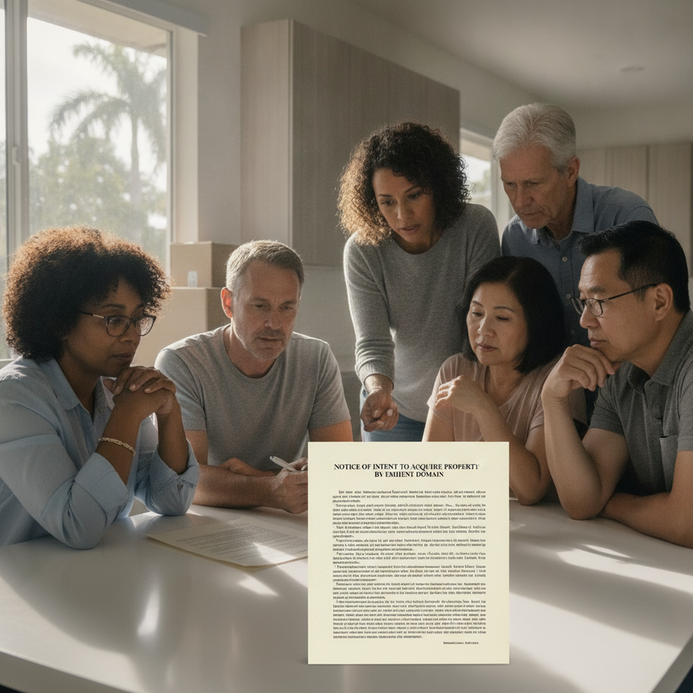
Getting a notice that your property might be taken by the government is never easy. The process can be intimidating, but Florida’s reforms aim to make it more understandable and fair for property owners. Here’s a step-by-step look at what usually happens:
-
Notice and Explanation: The government must send you a formal notice describing the property they want, the reason for taking it, and the amount they’re offering as compensation. This isn’t just a form letter. The notice has to include enough detail for you to understand what’s at stake.
-
Your Right to Object: You have the right to challenge the taking in court. If you believe the project isn’t a real public use, or if you think the government’s offer is too low, you can push back. Florida’s laws make it easier for you to get legal help and present your side.
-
Independent Appraisals: Both you and the government can hire independent appraisers to determine what your property is really worth. This is important, since the first offer is often on the low side. You can use your appraisal as evidence in negotiations or court.
-
Negotiation and Hearings: If you don’t agree with the government’s offer, you can negotiate for a better deal. Many cases settle before going to court. But if you and the government can’t agree, a judge or jury will decide if the taking is valid and what the fair value is.
-
Payment and Possession: If the court approves the taking, you won’t have to move out overnight. The government has to pay you first, and you’ll have time to find a new place or relocate your business.
Throughout the process, Florida law says the government often must pay your reasonable legal and appraisal costs. This levels the playing field and means you don’t have to fight city hall alone. If you’re facing this situation, speak with an attorney who understands Florida eminent domain reform after Kelo, since the process is full of technical details and deadlines.
How Compensation Works Under the New Rules
Most property owners worry about one thing above all, will they get enough money if their property is taken? Florida’s eminent domain reform after Kelo strengthens your rights when it comes to compensation.
The starting point is “just compensation.” This means you should get the fair market value for your property, the price a willing buyer would pay a willing seller, with no pressure. But the law goes further. You may also be entitled to compensation for other impacts, like:
- Moving costs, including packing, transporting, and setting up in a new place
- Lost business income if you own a shop, office, or other commercial venture
- The cost of replacing fixtures, equipment, or machinery
- Loss of business goodwill, which means the value of your reputation and customer relationships
- Attorney’s fees and appraisal costs, often paid by the government
For example, if you run a family restaurant and the building is taken to widen a road, you might get paid for the value of the land, the cost to move your kitchen equipment, any lost income during the move, and the cost to notify customers about your new location. If you’re a homeowner, you can get help with moving expenses, utility hookups, and other out-of-pocket costs.
Both sides can bring in expert witnesses to argue about value and damages. If you don’t agree with the government’s number, you can negotiate or take the case to court. The reforms mean you don’t have to accept a lowball offer just to move things along. The law is designed to make sure you walk away with a fair deal, not a financial loss.
Special Considerations for Residential, Commercial, and Agricultural Owners
Florida eminent domain reform after Kelo applies to all types of property, but the impact can look different depending on what you own. Here’s what you should know based on your situation:
Residential Owners
Losing your home is emotional and disruptive. The reforms give you more power to fight the taking or at least get fair compensation. Homeowners now have the right to challenge the reason their property is being taken and to demand proof that the project really serves a public need. You’re also entitled to compensation for moving expenses, utility deposits, and the cost of securing a new home. If only part of your property is taken, say, the city wants a strip of your backyard for a sidewalk, you can also claim for any decrease in value to what remains.
Commercial Owners
For business owners, the stakes are often higher than just losing a building. A forced move can mean lost customers, lost profits, and even the end of your business. Florida’s reforms recognize these risks. You may be paid for loss of business income, costs to move equipment, and even the intangible value of your business relationships (goodwill). For example, if you run a small repair shop and the government takes your lot for a new fire station, you can seek payment for lost business during the move, advertising your new location, and any drop in value to your business.