Ever wondered what happens when stormwater from a road or public project floods your property in Florida? You might think it’s just bad luck or something you have to deal with, but the law can actually be on your side. Florida stormwater inverse condemnation is a legal concept that protects property owners like you when government actions damage your land without a formal taking. In this guide, you’ll learn what it means, how it works, and what steps you can take to secure compensation if your property is affected.
What Is Florida Stormwater Inverse Condemnation?
Let’s start with the basics. Condemnation usually means the government takes private property for public use, like building a new highway or expanding a city park. When this happens, owners are supposed to receive fair compensation. But what if the government never formally takes your land, yet their choices still lead to damages?
That’s where inverse condemnation comes in. Inverse condemnation flips the usual process. Instead of the government starting the case, it’s the property owner who brings a claim, arguing that a government project or policy has damaged their land. For stormwater, this often means flooding, erosion, or water pooling on your property due to changes in drainage or nearby construction managed by a public agency.
In Florida, stormwater management is especially important. Our flat landscape and heavy rainfall mean water needs to be carefully directed. When new roads, highways, or drainage systems go in, water sometimes ends up where it shouldn’t, like your backyard, farm field, or business lot. If this happens repeatedly or causes major harm, you could have a valid inverse condemnation claim.
The key point: If government-caused stormwater problems hurt your property, you may have the right to compensation, even if nobody knocked on your door to ask for it. The law recognizes that property can be “taken” or damaged without an official eminent domain action.
How Does Stormwater Cause Inverse Condemnation?
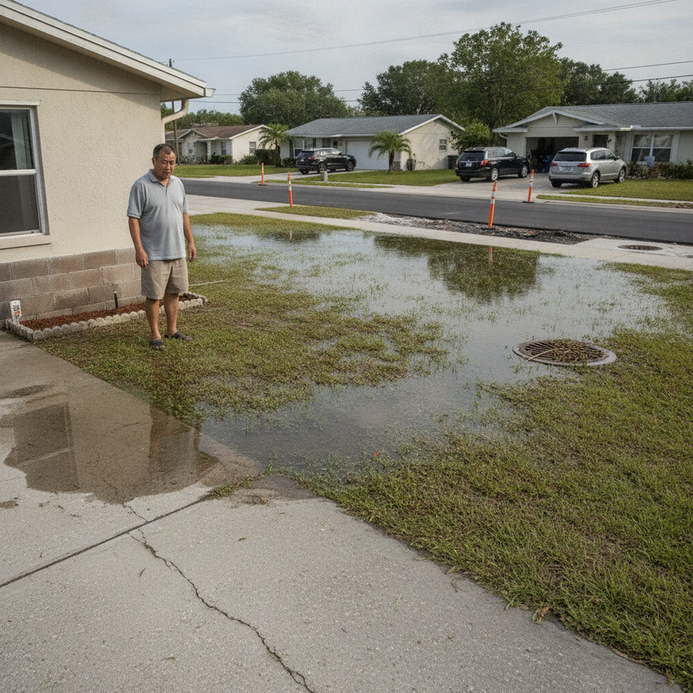
You might be asking, how does stormwater become a legal issue? Here’s a real-world example. Imagine the city widens a road near your house and adds new storm drains and curbs. The project is supposed to reduce neighborhood flooding, but now, every time it rains hard, water pours off the road, overflows the new drains, and pools in your yard. Maybe your grass never dries out, your driveway is washed out after each storm, or you notice cracks in your home’s foundation that weren’t there before.
Or consider a business owner who finds their parking lot underwater after a county-built retention pond overflows during storms. Customers avoid the area, business drops, and the building starts to develop mold from repeated dampness. The business owner investigates and discovers the pond was designed to protect nearby public buildings, but not enough capacity was set aside for neighboring properties.
These aren’t just minor annoyances. Over time, stormwater can erode land, destroy landscaping, damage building foundations, and make properties unlivable or unsellable. If you can link these problems to a specific government action or project, like a new drainage ditch, road, or retention basin, you may have a case.
Florida courts look for a few things to decide if you have a valid claim:
- A government project or change redirected stormwater onto your property, or changed the way water flows, causing new or worse flooding.
- The flooding or water damage is not a one-time event, but happens regularly or has lasting effects.
- The impact is significant, it lowers your property’s value, harms your ability to use the land, or results in expensive repairs.
Courts may also consider whether the government acted reasonably or if the flooding was an unpredictable natural event. If your property had never flooded before, and the issues started right after a public project, that’s a strong sign the government’s actions may be to blame.
Your Rights as a Florida Property Owner
It’s easy to feel powerless when water damages your property, especially if it seems like nobody is taking responsibility. But Florida’s Constitution and laws are clear: You’re entitled to fair treatment if your property is taken or damaged for public use, even if the government didn’t intend to take it. This protection applies to everyone, from homeowners and small business owners to farmers and land developers.
What does this mean for you? You have the right to seek compensation if a government project causes stormwater to flood, erode, or otherwise damage your property. This right covers not just total loss but also partial damages, like if only part of your land is affected or if your property becomes less valuable but isn’t totally unusable.
Here are some rights Florida property owners have under inverse condemnation law:
- The right to fair compensation for loss in property value, repair costs, or loss of use.
- The right to ask a court to recognize the government’s responsibility for the water problem.
- The right to have certain legal costs covered if your claim is successful, making it easier for everyday people to stand up for themselves.
One important note: You don’t have to wait for the government to admit fault. If you notice new flooding or water damage soon after a public project, you can start building your case right away. It’s helpful to talk to legal professionals early, so you understand your options and don’t miss important deadlines.
Steps to Take if You Suspect Stormwater Inverse Condemnation
It can be overwhelming to deal with flooding, especially if you’re not sure where the water is coming from or who’s responsible. If you suspect a government project is making things worse, here’s how to get started:
- Document the damage. Take clear photos and videos of flooded areas, eroded soil, damaged plants, or cracked foundations. Record the date and describe the weather and how long the issue lasts. Try to make a timeline if the flooding happens multiple times.
- Collect notices and records. Save any letters or flyers about nearby roadwork, drainage improvements, or public construction. These can help link your problems to a specific project.
- Monitor property value. If you think your property’s value has dropped, get a professional appraisal or talk to a local real estate agent. Keep records of any offers or sales that fell through due to the water issues.
- Talk to neighbors. Sometimes, the problem affects several properties. If your neighbors are also seeing increased flooding, you may be able to work together or strengthen each other’s claims.
- Reach out for legal help. Contact a lawyer or advocate familiar with Florida eminent domain and inverse condemnation cases. Many offer free consultations to help you figure out if you have a claim.
The more details you gather, the stronger your claim will be. Try to keep everything in one folder or a digital file. Don’t wait until the damage is severe, starting early gives you the best chance of success.
How Compensation Works in Florida Stormwater Inverse Condemnation Cases
If your claim is successful, what can you expect? Florida law requires the government to provide “just compensation.” This usually means paying you for the actual loss in your property’s value, along with direct costs from the damage.
Compensation might include:
- The drop in your property’s fair market value. For example, if your home would have sold for $400,000 before the flooding but only brings $325,000 now, you could seek the $75,000 difference.
- Physical damages, such as the cost to repair foundations, driveways, fencing, or landscaping ruined by water.
- Lost business income, if you operate a store, farm, or rental property and can show the flooding caused you to lose customers or revenue.
- Sometimes, compensation for emotional distress, though this is less common and depends on the facts of your case.
The process often involves back-and-forth negotiations with the government. Both sides may hire appraisers or engineers to study the flooding and estimate damages. If you can’t agree, the case can go to court, where a judge or jury decides the outcome. Many cases settle before trial, but being prepared with strong evidence makes your position much stronger.
Florida law also tries to level the playing field by covering certain legal fees if you win your case. This makes it more practical for property owners to stand up for their rights, even if they can’t afford expensive lawyers up front.
Common Challenges and How to Overcome Them
Pursuing a Florida stormwater inverse condemnation claim isn’t always easy. Here are some hurdles you might face, and tips to handle them:
Proving the Government Caused the Problem
You’ll need to show a clear connection between a specific public project and your stormwater issue. Sometimes the government argues that your flooding is due to heavy rain, your own maintenance, or natural changes. This is why documentation is so important. Keep detailed records, get expert opinions (like from an engineer or surveyor), and gather maps or drainage plans when possible.
For example, if your property never flooded before a new road was built, and now it happens every storm, that pattern can help prove your point. If an engineer can show water flows have changed direction or speed, even better.
Dealing With Delays and Bureaucracy
Government agencies can be slow to respond or may initially deny responsibility. You might get shuffled between departments, or told to file complaints that seem to go nowhere. Don’t give up. Persistence pays off. Keep copies of every letter, email, or phone call. Note who you spoke with and what they said. If you’re not getting answers, a lawyer can often cut through the red tape.