Ever wondered what happens if flooding caused by government actions damages your property in Florida? Maybe you’ve seen news reports about neighborhoods underwater after a new road project or drainage upgrade. This guide breaks down Florida flooding and inverse condemnation so you can understand your rights as a property owner. We’ll explain the law in plain language, walk through real-world examples, and offer practical steps if you ever face this problem yourself.
What is Inverse Condemnation?
Let’s start with the basics. You might have heard of eminent domain, that’s when the government takes private land for public use, like building a highway or a school, and pays the owner for it. Inverse condemnation flips this around. Here, the government doesn’t go through the usual process or offer you money. Instead, something they do, like changing a road, building a dam, or altering drainage, ends up damaging or even taking part of your property. You’re left with the consequences, and the only way to get compensated may be to take legal action against the government yourself.
Inverse condemnation comes up a lot in Florida because of flooding. In a nutshell, if the government’s project or decision causes more water to end up on your land and creates lasting damage, you might have a case. The key difference is that you, as the property owner, are the one starting the legal process, not the government.
How Florida Flooding Leads to Inverse Condemnation
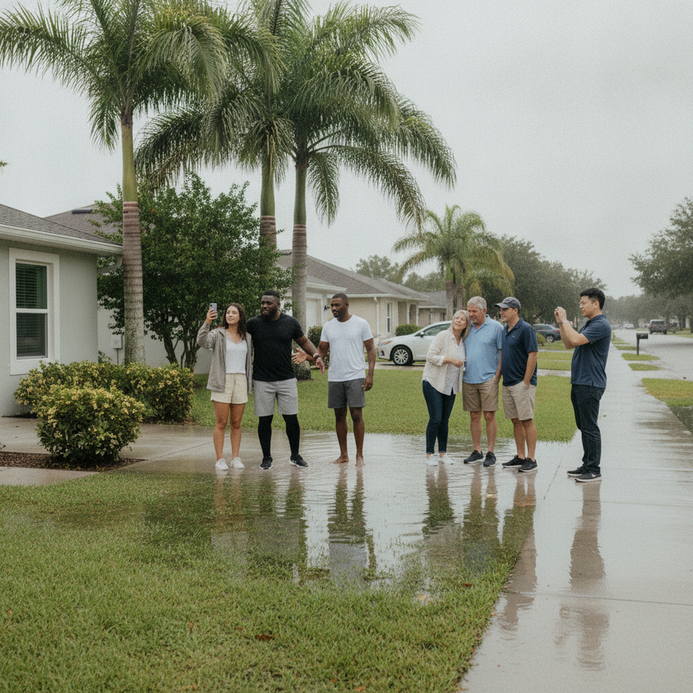
Flooding is a fact of life in Florida. Between hurricane season, heavy summer thunderstorms, and rising sea levels, water is always a concern. But not every flood is an act of nature. Sometimes, government decisions tip the balance. For example, when cities build new roads or highways, they may change how water flows across the land. Drainage systems can be rerouted, expanded, or blocked. Even well-intentioned projects, like building retention ponds to manage stormwater, can sometimes backfire and lead to new flooding in nearby neighborhoods.
Consider this scenario: A county widens a road near your house, adding lanes and a new sidewalk. After the project finishes, you notice that every heavy rain leaves your yard underwater. Before the project, water always drained away quickly. Now, it sits for days, ruining your grass and threatening your foundation. After talking to neighbors, you learn several homes on your street are struggling with the same issue. It turns out the road construction blocked a natural drainage path, forcing stormwater onto your properties. This isn’t just bad luck, it’s a direct result of a government action.
In situations like this, the link between the government’s project and your flooding is what matters. You’re not expected to accept ongoing damage just because a public improvement was made. If the project causes permanent or repeated flooding that didn’t happen before, Florida law recognizes your right to seek compensation.
Legal Rights of Property Owners in Florida
Florida’s constitution is clear: When the government takes or damages private property for public use, it must pay fair compensation. This idea goes back centuries, and it’s meant to protect ordinary people from bearing the burden of public projects alone.
But what counts as “damaging” property? Courts look at several factors. You’ll need to show:
- The flooding was caused or made worse by a government action, not just a natural storm.
- The flooding caused real, measurable damage to your home, land, or business.
- The damage is significant, not just a puddle that disappears in an hour.
For example, if your backyard gets a little soggy after a big storm, but dries out quickly, you probably don’t have a claim. But if a new city drain sends water directly onto your property every time it rains, washing out your landscaping and eroding your foundation, that’s a different story. The law says you shouldn’t have to shoulder the cost of government improvements alone.
Many people don’t realize that “taking” can include things other than physically grabbing your land. If flooding from a public project makes your property less valuable, unusable, or unsafe, it can count as a taking under Florida law. This is important for homeowners and business owners alike. For example, if standing water prevents you from renting out a commercial space or selling your home, that lost value matters.
Steps to Take if Your Property is Flooded
If your property has been flooded and you suspect a government project is to blame, it’s easy to feel overwhelmed. But there are concrete steps you can take to protect yourself and build your case.
-
Document Everything: Start by taking detailed photos and videos of the flooding, any damage to your property, and the conditions before and after. Keep records of repair costs, property value estimates, and any correspondence with local officials. If you have “before” pictures showing your yard or home dry, those are helpful too.
-
Identify the Cause: Try to pinpoint what changed. Was there recent roadwork, drainage construction, or city landscaping nearby? Talk to neighbors to see if they’re having similar problems. Sometimes, a pattern emerges that points to a specific project.
-
Contact Local Officials: Report the flooding to your city or county government. Ask if they’re aware of drainage changes or construction that could be affecting your area. Keep a record of who you spoke to and what you were told. In some cases, the government may fix the problem or offer repairs, though this isn’t guaranteed.
-
Seek Professional Help: If the problem persists, contact a property rights attorney with experience in flooding and inverse condemnation. They can help you navigate the legal process and connect you with engineers or hydrologists who can provide expert opinions on the cause of the flooding.
-
Don’t Wait: In Florida, you generally have four years from the date of the damage to file an inverse condemnation claim, but acting quickly gives you the best shot at a successful outcome. Memories fade, and evidence can disappear over time.
Taking these steps helps you build a strong case if you decide to pursue compensation. It also shows the government you’re serious about protecting your property.
Real-World Examples of Florida Flooding Inverse Condemnation Cases
Let’s look at how these issues play out in real life.
In one Florida town, a group of homeowners noticed their yards were constantly flooded after a new highway was built nearby. The highway redirected stormwater in a way that overwhelmed the existing drainage ditches. After documenting the problem, several homeowners filed an inverse condemnation lawsuit. Experts showed that the flooding was worse and more frequent after the highway project. The court agreed that the government had effectively “taken” part of the homeowners’ property without fair compensation, and ordered payment for the damage.
Another example comes from a residential neighborhood where the city added a park and changed the landscape, but failed to provide enough drainage for the new water features. After heavy rains, water flowed into nearby homes, damaging floors and walls. Homeowners banded together, hired a lawyer, and proved that the city’s changes directly led to the flooding. The court found the city liable under inverse condemnation law.
Sometimes, the damages aren’t just to homes. In another case, a small business owner lost months of revenue when a government project caused repeated flooding that blocked access to their property. The courts ordered compensation not just for physical damage, but for lost business income as well.
These cases show the importance of linking the flooding directly to a government project and documenting the change over time. Courts want to see clear proof that your problems didn’t start until after the government took action.
How to Prove Inverse Condemnation Due to Flooding
Proving that government-caused flooding amounts to inverse condemnation isn’t always easy. It’s not enough to point at a new road and say, “That’s the reason.” You’ll need evidence and, in most cases, expert help.
Here’s what typically goes into building a successful case:
-
Gather Evidence: Take photos, videos, and written notes every time flooding occurs. Save repair bills and property appraisals showing changes in value. If you have property surveys or old maps, these can help show what’s changed.
-
Get Expert Opinions: Engineers or hydrologists can examine how water moves across your property. They might use computer models or study rainfall data to show that a government project changed drainage patterns. Their reports can be critical in court.
-
Establish a Timeline: Show that the flooding started or got worse right after a government project was finished. Dates matter. If the problem is ongoing, keep a log of each event.
-
Demonstrate Permanent or Recurring Damage: Courts want to see that the flooding isn’t just a one-off problem. Regular flooding, or damage that doesn’t go away, makes your case much stronger.
-
File a Legal Claim: With your attorney’s help, you’ll formally request compensation from the government. If negotiations fail, your lawyer will file a lawsuit on your behalf. The process can take time, sometimes months or even years, but a strong case can lead to a fair settlement or court order.
For example, suppose you live in a neighborhood that never flooded before a county-built retention pond was added nearby. Your attorney might hire a hydrologist to run water flow tests showing the pond now overflows onto your property during heavy rains. Combined with photos, repair bills, and neighbor statements, this can create a compelling case for inverse condemnation.
What Compensation Can You Get?
If you win an inverse condemnation case, compensation is meant to make you whole. That means putting you back in the position you would have been in if the government’s project hadn’t damaged your property.
Some possible types of compensation include: