Ever wondered what happens to local businesses when a new highway or road project blocks their entrances? For many in Florida, this is more than just a headache, it can mean real losses. If you’re a property or business owner facing eminent domain, it’s crucial to understand how florida business damages loss of access can affect your compensation and your future. This guide breaks down what loss of access means, why it matters, and what steps you can take to protect your rights.
What Is Loss of Access in Eminent Domain?
When the government or a public agency takes property for a public project, a process called eminent domain, they’re required to compensate the owner fairly. But compensation isn’t just about the land itself. If a project limits or blocks access to your property, it can seriously hurt your business. This is called loss of access.
Imagine your shop relies on a busy street for customers. If construction blocks your driveway or changes traffic flow so customers can’t get in easily, your business may see fewer sales. Florida law recognizes that this kind of impact can count as a business damage. But not every inconvenience qualifies. The loss must be substantial, not just temporary or minor.
Real-World Example
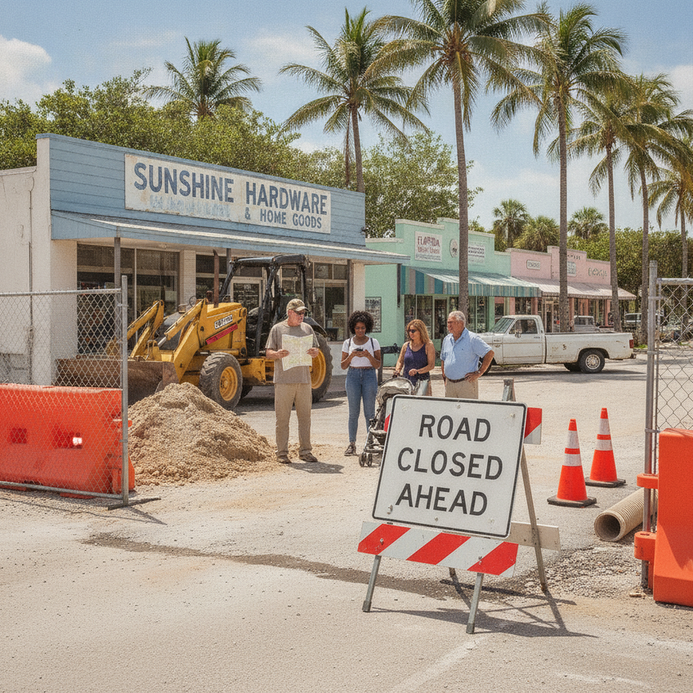
Let’s say a new road expansion puts up a barrier that forces drivers to make a long detour just to reach your store. If the change results in a clear drop in business, you may have a valid claim for florida business damages loss of access. These situations aren’t rare, businesses across Florida have seen customer counts fall overnight because of blocked driveways, sudden traffic pattern changes, or confusing detours that frustrate regulars.
How Florida Law Handles Business Damages and Loss of Access
Florida is one of the few states that allows business owners to seek damages for loss of access when property is taken through eminent domain. The rules, though, are specific. You can claim compensation if you can show that your business suffered significant harm because the project blocked or limited entry for customers, suppliers, or employees.
The law separates damages into two main groups:
- Direct damages, like when part of your land is taken.
- Business damages, which include losses tied to access issues, lost profits, or reduced value of your business.
Let’s break down what these really mean. Direct damages usually cover the part of your property physically taken or used by the government. Business damages, on the other hand, cover the ripple effect, things like a drop in sales, customer confusion, or even needing to shut down temporarily because customers can’t get in.
Not every business qualifies. To seek business damages for loss of access, you generally need to:
- Own or operate a business on the property being taken.
- Have at least five years of continuous operation at that location (with some exceptions).
- Prove that the taking or project has directly caused the loss.
This means a brand-new restaurant or shop might not qualify, but a long-standing family hardware store or auto repair shop probably could. There are exceptions, sometimes, if you can show you were about to open or there were unusual circumstances, you might qualify even if you’re under the five-year mark. But for most, a longer history on the property makes the case stronger.
If you meet these standards, you can file a claim for florida business damages loss of access as part of the eminent domain process. The claim process is detailed and can involve several steps, including legal filings, expert reports, and possibly negotiations with government agencies. Missing a deadline or failing to provide the right documentation can mean missing out on compensation altogether.
What Does “Substantial” Loss of Access Mean?
Florida courts look for real, measurable impacts, not just inconvenience. For example, if your business entrance is completely blocked for months, or if traffic changes make it much harder for customers to find you, this could qualify as substantial. Temporary disruptions, like a few days of construction, usually do not.
Substantial loss is about more than just a little drop in foot traffic. Courts want to see that the harm is ongoing or even permanent, like a median that prevents left turns into your parking lot, or a fence that cuts off your only entrance. If it takes customers twice as long to get into your store, or if delivery trucks can’t reach your loading dock, those are clear examples of substantial loss. On the flip side, if construction just makes things inconvenient for a week or two, that’s probably not enough.
It’s not always black and white, though. Sometimes, even small changes, like moving a bus stop or changing where crosswalks are, can make a big difference in how easy it is for people to visit your business. The key is showing, with proof, that the change had a real impact on your bottom line.
Types of Access Changes That Matter
Several specific changes can count as loss of access under Florida law:
- Permanent closure of a driveway, forcing customers or suppliers to use a different entrance that’s much harder to find.
- Installation of a median or barrier that makes it impossible to turn directly into your property from the main road.
- Rerouting of traffic so vehicles must make long detours or U-turns to reach your business.
- Elimination of street parking in front of your shop, causing customers to park far away or skip visiting altogether.
- Construction fencing that blocks visibility and makes your storefront look closed, even if you’re still open for business.
Each of these scenarios can hurt your revenue in different ways, from fewer walk-in customers to delayed deliveries or missed appointments. The impact isn’t always obvious at first, but over weeks and months, the losses can add up.
Steps to Take If Your Business Faces Loss of Access
If you think a public project will hurt your business by blocking access, it’s important to act early. Here’s what you can do:
- Document everything. Take photos, keep notes, and gather business records showing how access changes have affected your sales or operations. Save customer complaints or comments, too, these can help show that customers noticed and cared about the access problem.
- Contact a qualified appraiser or expert. They can help estimate the financial impact of the access loss. An expert can also help identify losses you might not have considered, like lost contracts or extra costs for alternate delivery routes.
- Get legal advice. Eminent domain law in Florida is complex, and deadlines for filing claims are strict. A lawyer can help you avoid mistakes and maximize your compensation. They’ll also be familiar with the kinds of proof that work best in court or settlement talks.
- File your claim for florida business damages loss of access as soon as possible. The clock starts ticking once you receive notice of the property taking. Missing a filing deadline can mean losing your right to compensation.
The more evidence you have, the stronger your case will be. Courts and agencies look for clear, logical connections between the project, loss of access, and your business losses. For example, if you can show your sales dropped immediately after a driveway was blocked, and then rebounded once access was restored, that’s strong proof the project caused your losses.
Building Your Evidence: What to Gather
- Sales data for at least three years before and after the access change, if possible
- Photos and videos showing blocked entrances, signs, or other changes
- Customer feedback, reviews, or complaints about access problems
- Delivery logs or supplier records showing missed or delayed shipments
- Employee statements about how their commutes or jobs were affected
Having a timeline is helpful, too. For example, noting the exact date access changed and comparing it to sales trends or customer visits can paint a clear picture.
Common Challenges in Proving Loss of Access Damages
Navigating a case for business damages isn’t always simple. You might run into issues like:
- Proving that your sales drop is directly linked to the construction or road changes, rather than other outside factors. For example, a slow season or new competition can muddy the waters.
- Showing that the loss of access is permanent or long-term, not just a short-term inconvenience. Agencies may argue the disruption was only temporary, even if the effects linger.
- Disagreements with appraisers or government experts about the value of your losses. Different experts may reach different conclusions about lost profits or business value.
- Addressing claims that your business would have declined anyway, regardless of access changes. This can happen if your industry is shrinking or local demographics are changing.
It’s not unusual for government agencies to argue that any lost sales are due to normal business ups and downs. That’s why it’s so important to have clear records and, when possible, expert support.
Example: Restaurant Access Blocked
Imagine a family-owned restaurant in Florida that loses its main driveway after a road project. For years, customers have pulled in directly from the main road. Now, because of new medians, drivers need to go past the restaurant, make a tricky U-turn, and circle back just to get in. If customers find the new route confusing or too time-consuming, many may stop coming. If business drops by 40%, this is more than just a minor problem. With good documentation and professional help, the owners may recover damages for the florida business damages loss of access.