If your property or business is facing government acquisition in Florida, you’re probably wondering about compensation. Are you entitled to more than just the value of your land? What’s the difference between business damages and relocation costs? In this guide, we’ll break down Florida eminent domain business damages vs relocation costs so you know what’s at stake, how the two compare, and what you might be able to claim. Understanding these differences can mean thousands of dollars, and the future of your business.
Understanding Eminent Domain in Florida
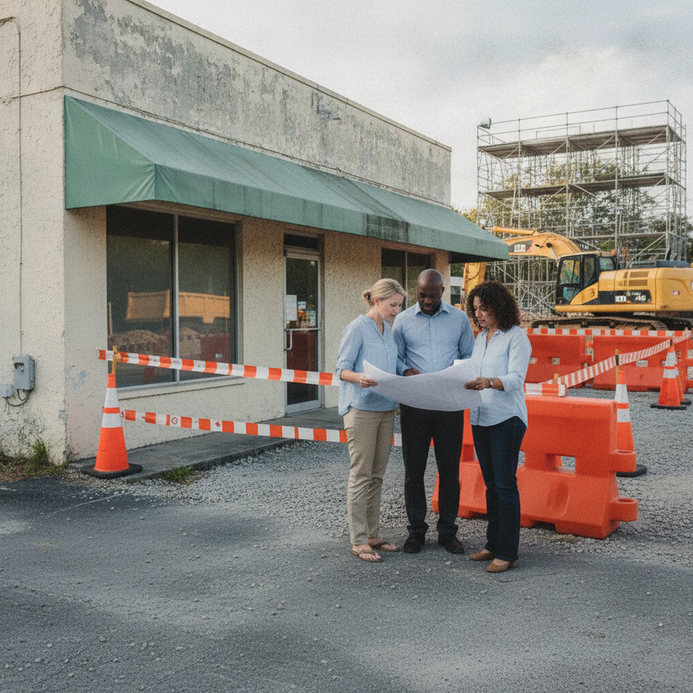
Eminent domain is the legal power that lets the government take private property for public use, like building a highway, extending a railway line, or widening a road, as long as the owner is paid fairly. In Florida, the process follows strict rules designed to protect property owners, but it’s not always as simple as getting a check for your land. When a business is involved, the ripple effects can go far beyond the property itself.
The government’s project can affect everything from your cash flow to your customer base, and even your long-term ability to stay open. That’s why Florida law recognizes both business damages and relocation costs as separate categories of compensation.
Most people are familiar with the idea of getting paid for their land. But if you run a business on that land, you might have a lot more at stake than just bricks and mortar. You could lose valuable foot traffic, see your sales plummet, or even have to close entirely. Whether you own a corner store, a family restaurant, or a small warehouse, these disruptions can hit hard. That’s where understanding the difference between business damages and relocation costs really matters.
What Are Business Damages?
Business damages refer to the financial harm a business suffers when a government project either takes part of its property or makes it harder for customers to reach. This harm isn’t always obvious right away. It can show up in lost profits, unexpected costs, or a lasting drop in your business’s value. In Florida, only certain types of takings trigger business damages, usually when the government takes part of a commercial property and that partial taking hurts the business operations.
Common Types of Business Damages
- Lost profits from reduced customer access or visibility, like when a new road blocks the main entrance or shortens parking.
- Decreased overall value of the business, if your shop becomes harder to find, or you lose critical square footage.
- Costs to adapt operations, such as reconfiguring your space, moving equipment, retraining staff, or ramping up advertising to let customers know about changes.
Let’s take a concrete example: Suppose you own a dry cleaning business, and the city takes the front half of your property for a sidewalk expansion. The new sidewalk reduces your parking from ten spaces to three. Customers start going elsewhere, and your revenues drop. In this case, you could be entitled to business damages for the lost profits, the cost of changing your business layout, and any permanent drop in your business’s value.
Florida law does have rules about who can claim business damages. The business usually needs to have operated at the location for at least three years before the government’s action. Not every business qualifies. For instance, home-based businesses or recently opened stores may not be eligible. That’s why it’s important to check your specific situation.
Business damages are designed to help you recover from the disruption, so you’re not left holding the bag for losses you couldn’t control. But proving these damages takes careful documentation and, often, expert help.
What Are Relocation Costs?
Relocation costs are the expenses you face when you have to move your business or property because of eminent domain. These costs are about the practical side of uprooting your business, think moving trucks, real estate agents, and the headache of setting up shop somewhere new. Florida and federal laws require the government to cover reasonable relocation expenses, but only for actual, documented costs.
Typical Relocation Expenses
- Packing and moving inventory, furniture, machinery, or specialized equipment.
- Costs to secure a new location, like security deposits, first and last month’s rent, or connection fees for utilities.
- Rebranding and updating marketing materials, such as printing new business cards, changing the address on your website, or alerting customers through mailers and ads.
- Temporary loss of income if you have to close for a few days or weeks during the move.
- Fees for professional movers, contractors, or specialists needed to dismantle and reinstall equipment.
- Possible renovations or upgrades needed at the new site to match your old setup.
For example, if you run a bakery, relocation costs might cover moving ovens and counters, setting up refrigeration at the new place, and the cost of transferring your business license or food permits. If you need to close for a week, reasonable lost income during that time can also be claimed.
It’s important to know that relocation costs are about making the move itself possible, they don’t cover lost profits from fewer customers or a less desirable location. That’s the territory of business damages.
Key Differences: Florida Eminent Domain Business Damages Vs Relocation Costs
So, what’s the real difference? Think of relocation costs as the price tag for physically moving your business. They’re the nuts and bolts: packing, shipping, setting up. Business damages, meanwhile, cover the broader financial blow that comes when your business is disrupted or permanently harmed, even after you’ve moved.
Relocation costs are usually easier to calculate. You gather your receipts, document your expenses, and submit them for reimbursement. The government reviews them and, if they’re reasonable and connected to the move, you’ll likely get paid back.
Business damages are more complicated. They often require financial experts or accountants to estimate your actual losses. You might need to show several years of tax returns, profit-and-loss statements, and projections for what your business would have earned if the government hadn’t stepped in. The process can involve negotiations, and sometimes disagreements with the government’s appraisers about how much you’ve really lost.
Here’s another way to look at it: If the government takes part of your retail store’s parking lot, your relocation costs might cover the price of moving your merchandise and lease fees for a new space. But if your new shop is on a side street with less foot traffic and sales dip by 40 percent, that ongoing loss is business damage, not just a moving expense.
Both types of compensation are important, but they solve different problems. Relocation costs get you into a new space. Business damages help you recover from the hit to your bottom line and ongoing business health. Sometimes, you can claim both, but the requirements and paperwork differ for each.
How Claims Are Evaluated in Florida
Florida has clear but sometimes strict rules about how business damages and relocation costs are handled. The process for getting paid is different for each type of claim, and it pays to know what to expect.
Business Damages Claims
Business damages claims are rarely simple. You’ll need detailed financial records, like tax returns, accounting statements, and bank records, for at least the last three years. You may also need to work with a business valuation expert or accountant who can help calculate your projected losses. This might include estimates of lost profits, lost goodwill, or even decreased resale value for your business.
The government will have its own experts who may challenge your numbers. They might argue your losses aren’t as high as you think or that you could have avoided certain damages. That’s why documentation matters. You want to show clear, credible evidence for every dollar you claim. If you have seasonal swings, special events, or unique business cycles, these should be reflected in your claims.
Some losses just aren’t covered, like damages due to normal market competition or losses you could have prevented. It’s wise to get help sorting out what qualifies and what doesn’t.
Relocation Cost Claims
Relocation cost claims are more straightforward. The main requirement is that the costs are reasonable, necessary, and directly related to the move. You’ll need to keep every receipt, invoice, and contract related to packing, moving, installing equipment, and setting up shop. Take photos of your old and new locations, and make notes about why each expense was needed.
If you have to shut down your business during the move, you can claim reasonable lost income for that period, but you’ll need to show how you calculated that amount, like using average daily sales from previous months.
The government will review your paperwork and may question unusual or very high expenses. If you’re planning a major upgrade or expansion as part of your move, keep in mind that only the costs needed to restore you to your original business operation are covered, not the price of making your business bigger or more modern.
Practical Examples: What Might You Recover?
Let’s look at a few real-world scenarios, since every situation has its own twists.
Imagine you own a family-run restaurant on a busy street in Orlando. The city takes part of your property to widen a road, removing half your parking spots. You can’t serve as many customers, and sales drop by 30 percent. Your business damages claim might include lost profits for the next few years, costs to reconfigure your seating, and a decrease in your business’s value if you ever want to sell. If you eventually have to move, relocation costs would cover moving your kitchen equipment, updating your licenses, and the income you lose while you’re closed.